

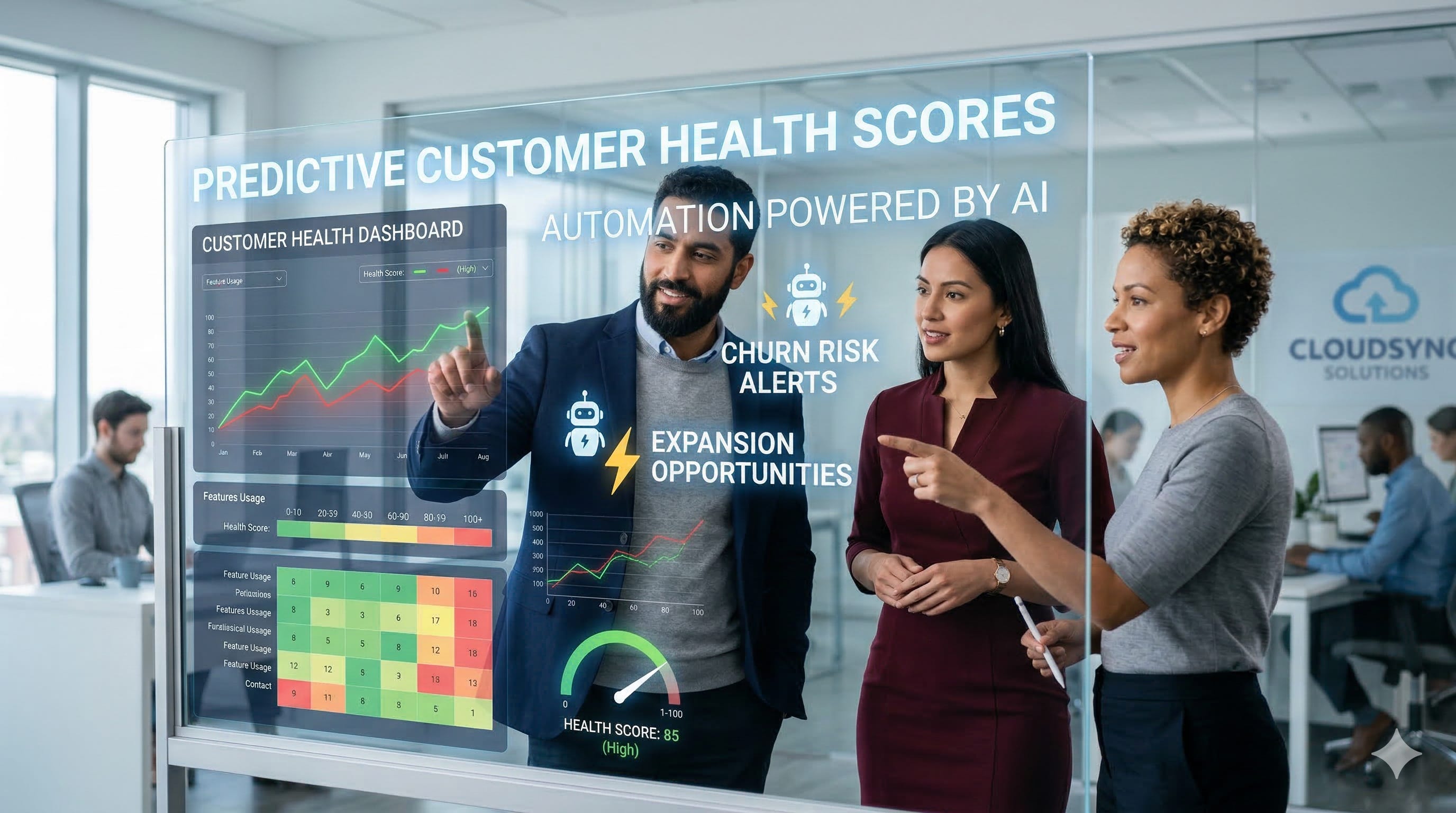
Losing customers is painful.For SaaS operators in 2026, it’s also increasingly avoidable.
AI is changing how software is built, sold, and adopted - and it’s also changing how customers leave. Products are easier to switch, competitors move faster, and expectations are higher than ever. If you wait until churn shows up in a dashboard, you’re already too late.
To stay ahead, Customer Success teams need to move from reactive health scoring to predictive, AI-powered customer intelligence.
This shift is quickly becoming one of the biggest competitive advantages in SaaS.
The Problem with Traditional Customer Health Scores
Most SaaS companies still rely on health scores built from a small set of lagging indicators:
Login frequency
Support ticket count
NPS surveys
Renewal dates
Contract size
Last activity
These metrics are useful, but they tell you what already happened - not what will happen next.
For example:
A customer opens more support tickets after they’re already frustrated
NPS drops after the relationship is damaged
Logins fall after the team has already stopped using the product
Renewal risk appears when the decision is already made internally
By the time these signals show up, churn is often inevitable.
Traditional health scoring works in stable environments.
But SaaS today is not stable - it’s fast, competitive, and AI-driven.
Why AI Changes Customer Success
AI can process thousands of signals across product usage, communication, organizational changes, and behavior patterns - something manual scoring models simply can’t do.
Instead of asking:
What is the customer doing right now?
AI can ask:
What is this customer likely to do next?
This is the difference between a lagging indicator and a leading indicator.
AI-powered health scoring combines data from multiple sources:
Product analytics
CRM activity
Support conversations
Email and Slack sentiment
Billing and contract history
User-level behavior
Org-level changes (job moves, layoffs, leadership changes)
Feature adoption depth
Time-to-value metrics
When these signals are analyzed together, patterns emerge that humans would never see manually.
That’s where predictive churn prevention starts.
How AI can reduce churn before it happens
1. Feature fit, not just logins
Traditional health scores treat activity as success.
But logging in does not mean the product is delivering value.
AI can measure:
Which features are used
How deeply workflows are integrated
Whether usage matches successful customers
Whether adoption is growing or flattening
How many users are active vs. invited
For example:
Two customers log in every week.
Customer A uses core features daily.
Customer B only checks reports once a week.
Traditional score → both healthy
AI score → Customer B is at risk
Feature-level intelligence is one of the strongest predictors of churn.
2. Sentiment Intelligence across conversations
Customers rarely say:
We’re going to churn.
But they show signals in how they communicate.
AI can analyze:
Support tickets
Emails
Slack / Teams messages
Call transcripts
Meeting notes
NPS comments
It can detect patterns like:
Increasing frustration
Shorter responses
Slower replies
Negative wording
Confusion about product value
Repeated complaints
Human CSMs notice some of this.
AI notices all of it — across every account.
This turns communication into a measurable health signal.
3. Relationship risk detection
One of the biggest churn triggers is losing your internal champion.
But most companies find out too late.
AI can monitor signals like:
Job changes on LinkedIn
Email bounce patterns
New contacts replacing old ones
Reduced activity from key users
Executive sponsor disengagement
For example:
Your power user leaves → usage drops → renewal fails.
With AI:
Champion leaves → alert triggers → CSM re-engages → risk reduced
Relationship intelligence is often more predictive than usage data.
4. Behavioral pattern changes
Churn rarely happens suddenly.
It usually follows a pattern:
Slightly less usage
Fewer users logging in
More support questions
Slower responses
Missed meetings
Reduced feature adoption
Budget conversations
Individually, these signals look harmless.
Together, they form a churn pattern.
AI can detect these multi-signal patterns weeks or months earlier than humans.
That time difference is critical.
Because churn prevention only works when there’s still time to act.
5. Expansion and upsell signals
AI health scoring is not only about churn.
It also identifies accounts that are ready to grow.
Signals may include:
Increasing usage
New teams joining
High feature adoption
Positive sentiment
Frequent logins from leadership
Requests for advanced features
Instead of guessing who to upsell, AI can prioritize accounts most likely to expand.
This turns Customer Success into a revenue engine.
The business impact of predictive health scoring
Companies that adopt AI-driven customer intelligence often see:
Lower churn rates
Higher net revenue retention
Faster expansion cycles
More efficient CSM teams
Better forecasting accuracy
Stronger customer relationships
Why?
Because they stop reacting to problems and start preventing them.
Customer Success becomes proactive instead of reactive.
And in modern SaaS, proactive always wins.
The future of customer success is data-empowered
Customer Success used to be relationship-driven.
Then it became process-driven.
Now it’s becoming data-driven and AI-assisted.
The best CS teams will not replace humans with AI.
They will give humans better signals.
Instead of guessing which accounts need attention,
CSMs will know.
Instead of reviewing dashboards,
they’ll get alerts.
Instead of chasing churn,
they’ll prevent it.
That’s the shift happening right now.
And the companies that adopt it early will have a massive advantage.
Final Thoughts
If your health score only tells you who is already at risk, it’s too late.
If your health score can tell you who will be at risk next month,
you can change the outcome.
That’s the difference AI makes.
PS:
If you’re interested in AI-driven customer success, churn prediction, and go-to-market automation for SaaS operators, check out www.automaty.ai, a done for you AI Automation service for modern SaaS teams.
#SaaS #CustomerSuccess #AI #ChurnPrevention #CustomerRetention #AIAutomation